China's Fuxing High-Speed Rail: Riding the Beijing–Shanghai Line at 350 km/h
 L. Carver
Four and a half hours. That's all that separates Beijing's ancient hutongs from Shanghai's glittering Pudong skyline when you board a Fuxing bullet train on China's Beijing–Shanghai High-Speed Railway. For a country whose rail network was largely steam-powered within living memory, it's a number that still feels slightly improbable.
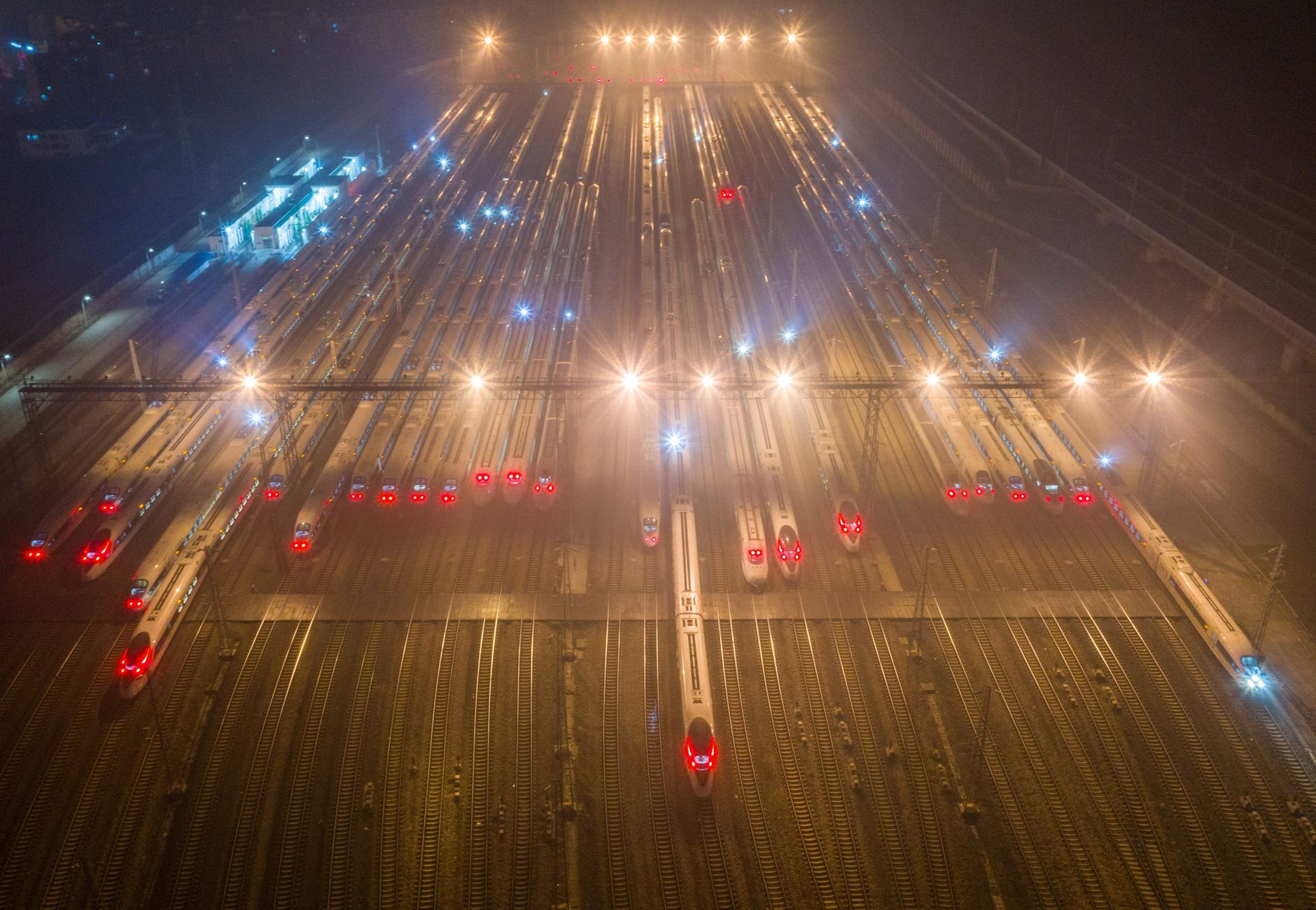 Photo by Greece-China News on Pexels.
China now operates the world's largest high-speed rail network: over 45,000 kilometres of dedicated track, with more under construction. The Beijing–Shanghai line sits at the heart of it. Opened in 2011 and upgraded steadily since, it carries more passengers annually than any comparable route on earth. The Fuxing trains (CR400AF series) that run the fastest services hit a commercial operating speed of 350 km/h. You'll feel it when flat farmland blurs into a single smear of green outside your window.
Planning the Journey
Beijing has two main departure points for Shanghai: Beijing South Station and, on some slower services, Beijing Railway Station. You want Beijing South (北京南站). It's enormous, gleaming, and genuinely easy to navigate even without Mandarin. Arrive 30 minutes before departure; security is thorough but fast.
Shanghai has three relevant terminals: Hongqiao (western suburbs, nearer the domestic airport and Yangtze Delta connections), Shanghai Station (central), and Shanghai Hongqiao again for some transfers. Most G-series trains (the fastest category) terminate at Hongqiao. Check your ticket carefully.
Booking options have improved dramatically for foreign visitors. The official 12306 app and website now accept international credit cards and passports as ID. Alternatively, Trip.com or the train counters at major stations handle English-language bookings without a Chinese bank account. Book two to four weeks out for holiday periods; otherwise, a few days' notice is usually fine.
Classes and What They're Actually Like
Second class is perfectly comfortable: think wide seats, generous legroom, power outlets, and air conditioning that actually works. For a sub-five-hour journey, most travellers have no compelling reason to upgrade.
First class adds a slightly wider seat, a dedicated service aisle, and a calmer atmosphere. Business class (商务座) is genuinely special: lie-flat seats, meal service, and enough space to feel like a private compartment. Prices run roughly 553 RMB (second), 933 RMB (first), and 1,748 RMB (business) for the full Beijing–Hongqiao run. Those figures shift seasonally, but the ratio stays consistent.
The onboard catering trolley sells hot noodles, rice boxes, and decent instant coffee. Bring snacks if you're particular about food; the selection leans toward the functional.
What You'll See
Honesty first: this is high-speed rail, not a scenic railway. For long stretches, the train runs elevated above the North China Plain, and the view is productive agricultural land punctuated by medium-sized cities you won't find on most tourist maps. Jinan flashes past. Nanjing marks the halfway point, and here the train crosses the Yangtze on the Nanjing Yangtze River Bridge before threading into the Yangtze Delta's dense urban fabric.
That midpoint crossing is worth putting your phone down for. The river is wide enough that both banks disappear into haze on overcast days, and watching a 350 km/h train cross it gives you a brief, sharp sense of the engineering involved.
The real reward is the city-to-city rhythm itself. You board in a capital, eat lunch somewhere over Shandong Province, and step out into Shanghai's afternoon light. No airport security theatre, no baggage carousel, no taxi queue from an airport built 40 kilometres from the city you actually want to be in.
Practical Notes Worth Keeping
Your passport must match the name on your ticket exactly. Real-name verification is strict; Chinese domestic ID rules apply to foreign visitors too, and conductors check.
Seats are assigned. Unlike some European rail systems, there's no standing-room culture on G-trains. If you're in second class, your seat number is your seat.
Left-luggage facilities exist at both Beijing South and Shanghai Hongqiao if you want to explore before checking into your hotel. The lockers take WeChat Pay or Alipay; cash isn't always accepted, so sort a payment method before you travel.
The gap between high-speed rail and flying on this route has essentially closed. Once you factor in check-in time, transit to suburban airports, and the city-centre-to-city-centre calculation, the train wins on total journey time more often than not. Cheaper, quieter, and you arrive somewhere useful.
Some train journeys are about the view. This one is about what modern rail can do when a country decides to build it properly. Ride it once and you'll find yourself quietly recalibrating your expectations for every other rail network you encounter afterward.
Get Rail Retreat in your inbox
New posts delivered directly. No spam.
No spam. Unsubscribe anytime.