What to Pack for a Multi-Day Train Journey (And What to Leave at Home)
 L. Carver
Rail Retreat is reader-supported. Some links below are affiliate links, and we may earn a commission on bookings or purchases, at no extra cost to you.
Three days into a trip across the Nullarbor on the Indian Pacific, I watched a man unpack an entire rolling suitcase onto his berth looking for a phone charger. There was nowhere to put it back. That's the first lesson of packing for a long train trip: your cabin is not a hotel room, and it will not forgive excess.
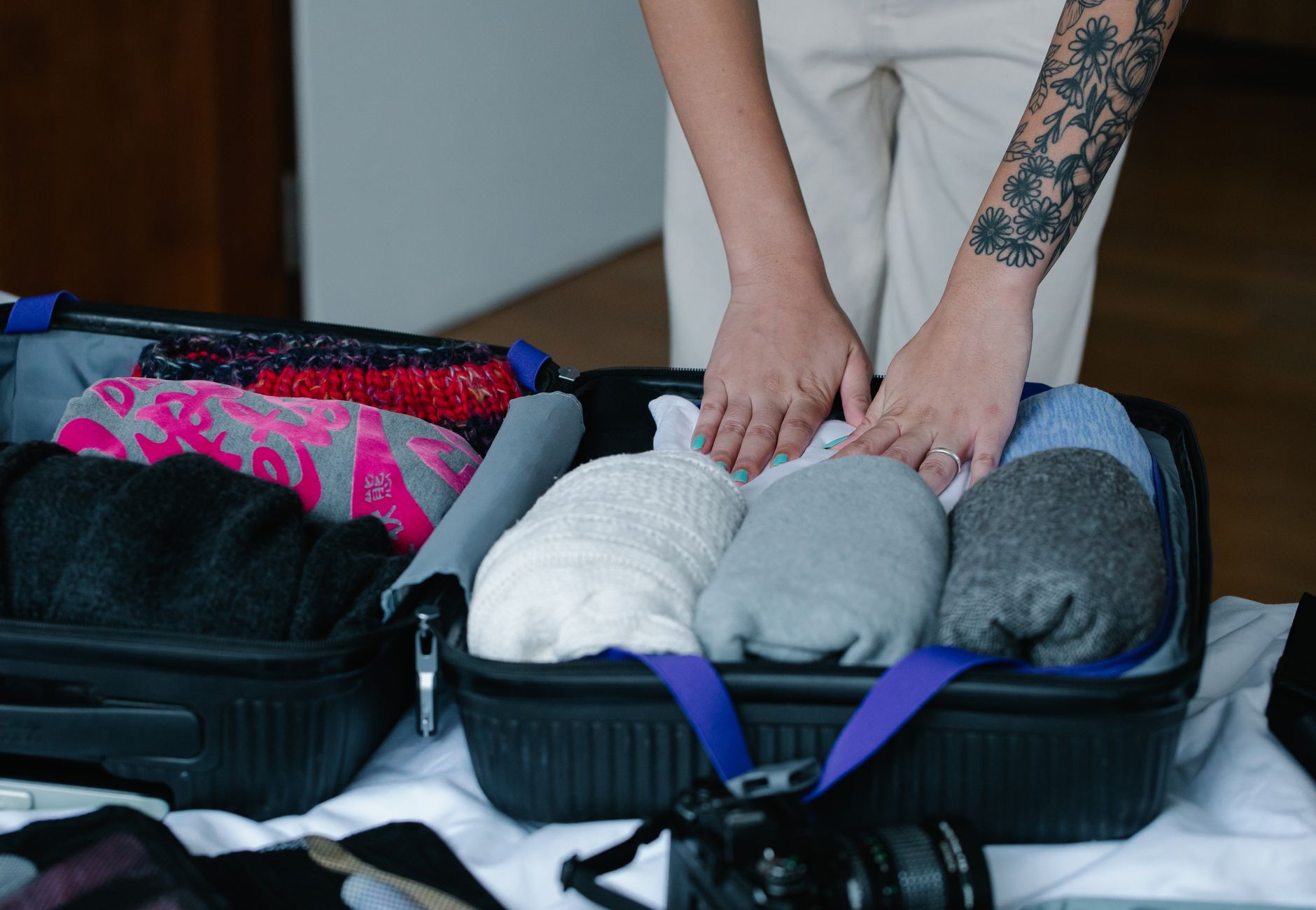 Photo by Timur Weber on Pexels.
After a decade of multi-day rides, from the Trans-Siberian to the Ghan to a string of sleeper trains through the Balkans, I've settled into a packing rhythm that works regardless of climate, border, or class of service. It has less to do with what's fashionable and more to do with what survives thirty hours of vibration, shared bathrooms, and your own boredom.
Soft bags beat hard suitcases, always
Sleeper compartments have narrow overhead racks and awkward under-bunk storage, not closets. A rigid suitcase with corners will fight you every time you try to wedge it somewhere. A duffel or soft-sided backpack collapses to fit the space you actually have. On the Reunification Express in Vietnam, the storage under the lower berth was maybe eight inches tall. My duffel slid in flat. My travel companion's hard-shell case rode the aisle floor for sixteen hours.
Pack in layers, not outfits
Train cabins run hot when the heating's on and cold when it's not, often within the same hour. Rather than packing complete outfits, bring a base layer, a mid layer, and something waterproof, then mix and match. On the Bergen Railway I went from shorts weather at the coast to needing a fleece and a wool hat two hours later as we climbed toward Finse. Nobody warns you about that transition if you've only seen photos of the destination.
The food situation is almost always worse than you think
Dining cars are wonderful when they exist and are well-stocked, and unreliable when they don't. Bring more snacks than seems reasonable: nuts, dried fruit, crackers, something with actual protein. A collapsible cup and a few tea bags or instant coffee sachets have saved me more mornings than I can count, especially on routes like the TAZARA where the dining car's hours are more suggestion than schedule.
A dedicated day bag changes everything
Keep a small separate bag, just big enough for your phone, a book, your passport, snacks, and a water bottle, that you can grab without digging through your main luggage every time you want something. This matters more at night, when your big bag is stowed and the lights are low and you don't want to wake your cabin mate rummaging for earplugs.
graph TD
    A[Main bag: soft-sided, stowed] --> B(Day bag: always within reach)
    B --> C{Need something?}
    C -->|Yes, often| D[Grab from day bag]
    C -->|Rare, planned| E[Open main bag at a stop]
What to leave behind
Skip the hardcover books; a tablet or e-reader weighs less and survives a dropped cup of tea better than paper does on a rocking carriage. Leave the valuables you can't afford to lose unless you're prepared to sleep with them. And resist the urge to pack "just in case" formal wear for a dining car that, on most routes, has no dress code stricter than clean clothes.
Sleep kit is non-negotiable
Earplugs, an eye mask, and a travel pillow are the three cheapest items in your bag and the ones that do the most work. Trains squeal, hiss, and jolt at stations in the middle of the night no matter how smooth the ride feels by day. I didn't believe this until a freight crossing on the Copper Canyon line woke me at 3 a.m. with a sound like the carriage was being dismantled. It wasn't. It was just a siding switch. But I never rode without earplugs again.
Packing well for a long train journey isn't about minimalism for its own sake. It's about building a kit that works with the rhythm of the train rather than against it: compact, layered, and organized so the two or three days you spend aboard feel like part of the trip, not an obstacle to it.
Get Rail Retreat in your inbox
New posts delivered directly. No spam.
No spam. Unsubscribe anytime.