Taiwan's Pingxi Branch Line: Riding the Rails to Sky Lanterns and Waterfalls
 L. Carver
Most visitors to Taiwan fly straight to Taipei and never leave the capital's orbit except to catch a high-speed train south to Kaohsiung or Tainan. That's a shame, because twenty minutes outside the city, a narrow branch line climbs into a river gorge lined with old coal-mining towns, bamboo forests, and waterfalls you can hear before you see them. The Pingxi Branch Line is only about 12.9 kilometers long, and you could drive its entire route in less time than it takes to order lunch. But rushing it misses the point entirely.
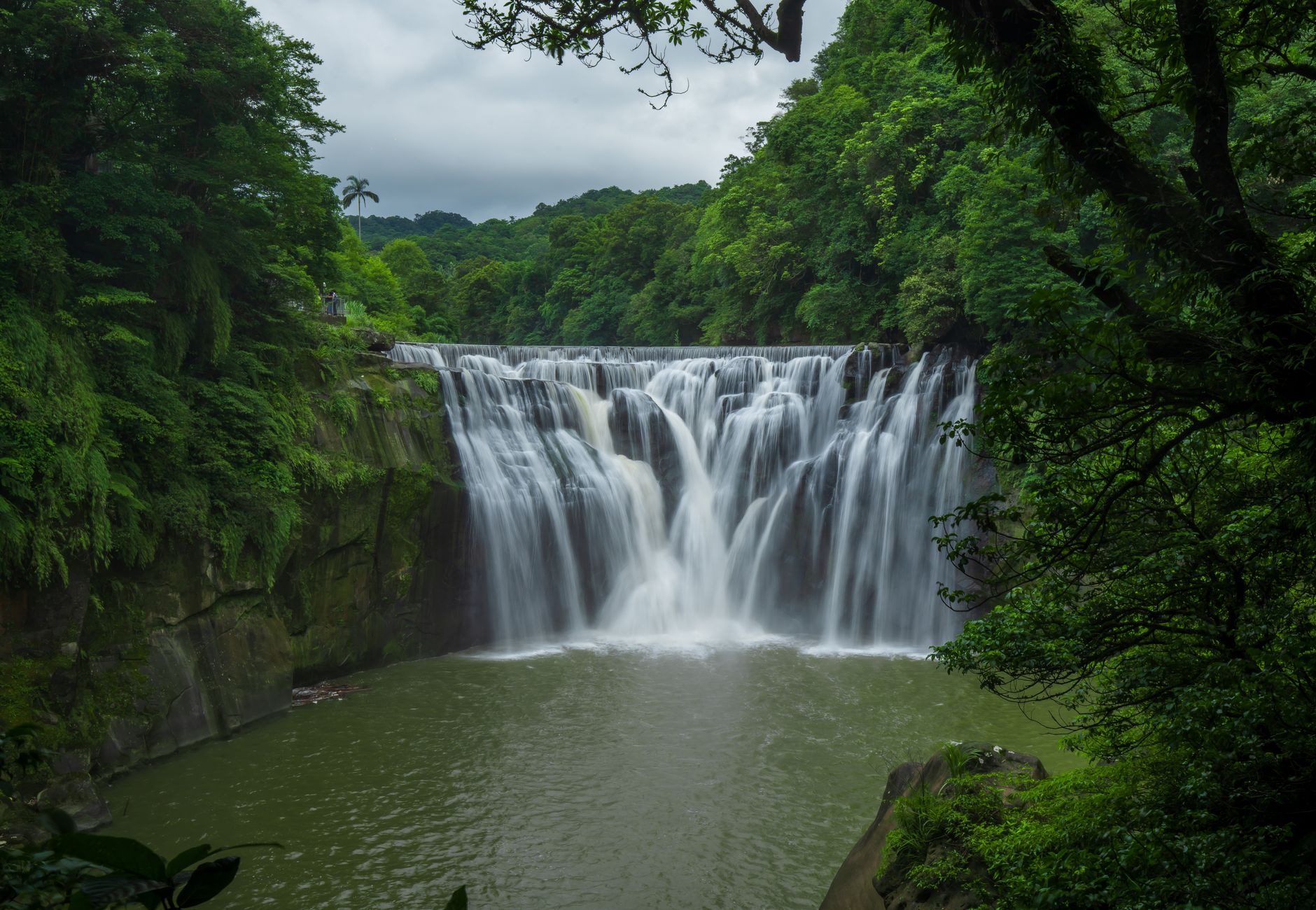 Photo by Wei86 Travel on Pexels.
The line starts at Sandiaoling Station, a junction so small it feels like a secret, and ends at Jingtong, a former coal town that stopped mining decades ago but never quite stopped being itself. In between sit Shifen, Pingxi, and Dahua, villages strung along the Keelung River like beads on a string. Trains run slow here, partly because the track is old and partly because nobody's in a hurry. The single-car diesel railcars rattle along at a pace that lets you watch dragonflies keep up outside the window.
Shifen is the station everyone knows, mostly because of the sky lanterns. Vendors sell paper lanterns right on the platform, and you write your wishes on them in black ink before lighting the bottom and releasing it over the tracks. The lanterns drift up past the station roof and over the gorge, and for a few seconds the sky fills with floating paper lit from within. It's touristy, sure, but it doesn't feel hollow. The tradition goes back to the Qing dynasty, when villagers used lanterns to signal that it was safe to return home after hiding from bandits in the hills.
What most visitors skip is the walk from Shifen Station to Shifen Waterfall, a fifteen-minute stroll along the old rail bed that opens onto Taiwan's widest waterfall, a 20-meter curtain of water locals call the "Little Niagara." It's not actually that little. The spray reaches the viewing platform on humid days, and the roar drowns out conversation within thirty meters.
graph TD
    A[Sandiaoling] --> B[Dahua]
    B --> C[Shifen]
    C --> D[Pingxi]
    D --> E[Jingtong]
Pingxi itself, the town the line is named for, sits a few stops further along and keeps the coal-mining history more visibly alive. Old miners' dormitories line narrow lanes, and a small museum near the station explains how the line was originally built in 1921 to haul coal out of the mountains rather than carry tourists in. The last working mine closed in the 1990s, and the railway nearly went with it. Local advocacy groups fought to keep it running as a heritage line, arguing that losing it would mean losing the only physical link to the valley's identity. They won, and the line has quietly become one of the most Instagrammed stretches of track in Taiwan without losing its working-class bones.
Jingtong, the terminus, rewards patience. The old wooden station building is nearly a century old, and the platform still has a hand-operated signal box that railway enthusiasts travel specifically to photograph. Grab a bowl of noodles at one of the shops built into former miners' housing, and you'll understand why some travelers spend a full day doing nothing but riding back and forth on a line that takes under an hour end to end.
A Taiwan Railways day pass covering the branch line costs a few hundred New Taiwan dollars, and trains run roughly hourly from Ruifang, the junction station reachable by regular rail from Taipei in about forty minutes. No reservations, no fuss. Just a slow train, a river gorge, and a sky occasionally full of paper lanterns drifting toward whatever wish you wrote on them.
Get Rail Retreat in your inbox
New posts delivered directly. No spam.
No spam. Unsubscribe anytime.