Riding the Douro Valley Railway: Portugal's Most Beautiful Train Journey
 L. Carver
Few train journeys in Europe earn the word beautiful without some asterisk attached, a caveat about crowds, or comfort, or the fact that the good scenery only lasts forty minutes. The Douro Valley line earns it clean.
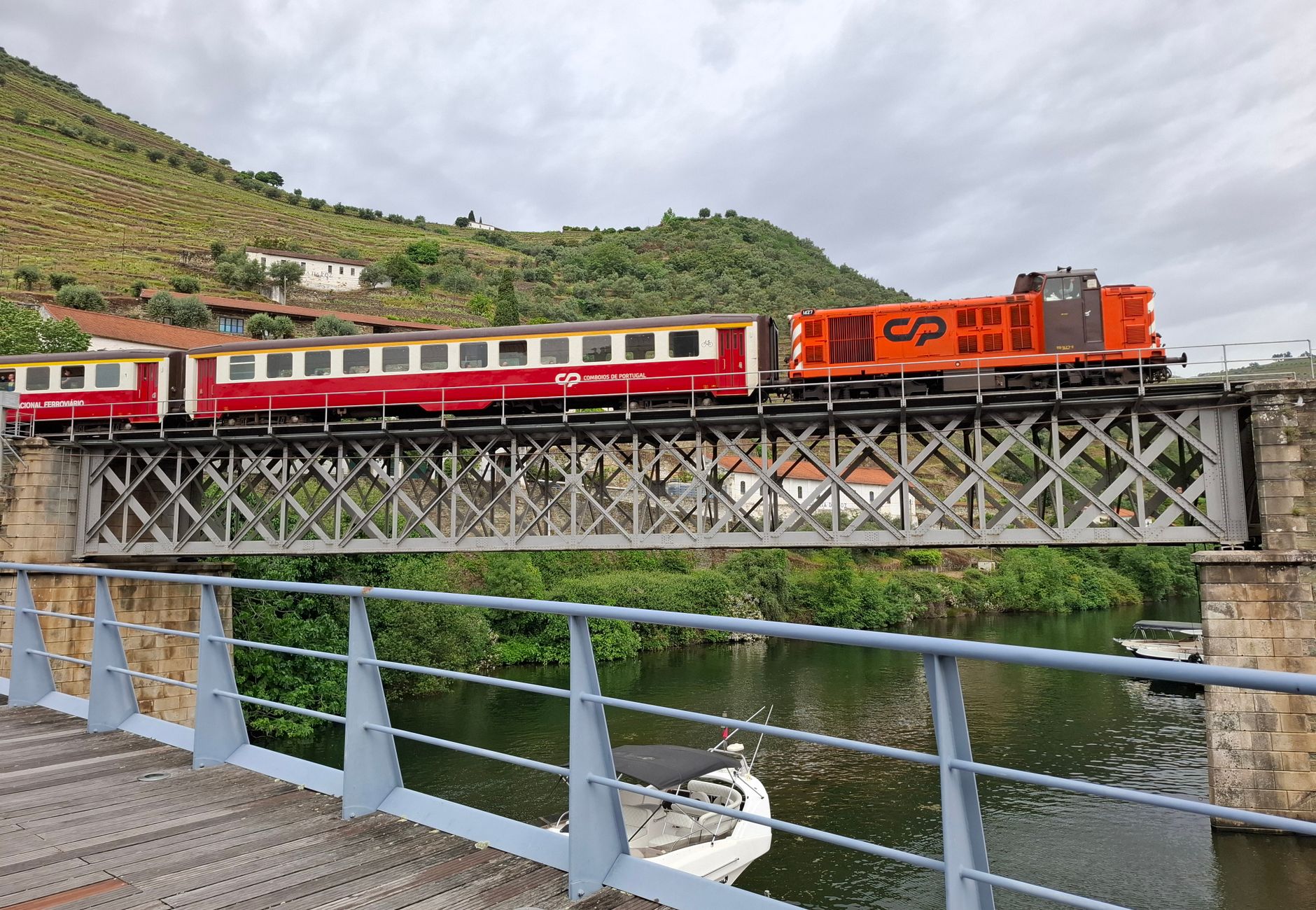 Photo by Filipa Moreira on Pexels.
Running roughly 200 kilometres from Porto's São Bento station east to Pocinho, the Linha do Douro traces the Douro River through terraced vineyards, medieval villages, and schist hillsides so steep you wonder how anyone ever planted a vine there, let alone harvested one. This is the heart of port wine country, UNESCO World Heritage listed since 2001, and the railway doesn't so much pass through it as thread through it, hugging the riverbank so closely that at certain points the water seems close enough to touch from the window.
The Route: What You're Actually Looking At
From Porto, the first stretch to Régua (about 110 km) is the one that most visitors do as a day trip, and it's genuinely outstanding. After leaving the city's suburban sprawl, the line climbs the Douro gorge and the scenery shifts suddenly, terrace after terrace of Douro vineyards stepping down toward the river, quintas (wine estates) perched on ridgelines, and occasional stone chapels that look like they've been there since before Portugal was Portugal.
Régua is the capital of the Douro Demarcated Region and worth a stop in its own right. Its railway station is famous for blue-and-white azulejo tile panels depicting traditional Douro life, harvesting grapes, loading barrels onto boats. Spend ten minutes there even if you're not stopping for lunch.
Beyond Régua, the line continues east through Pinhão, often called the most beautiful station in Portugal, with its own extraordinary tile panels, and then on toward Pocinho through increasingly wild and remote terrain. This eastern section carries far fewer tourists, which is precisely why it rewards the effort.
When to Go
September and October are the obvious answer: the grape harvest (vindima) fills the valley with activity, the light goes golden in the afternoons, and the temperatures are manageable without being cold. That said, May and June offer lush green hillsides before the summer heat bakes everything brown, a different kind of beautiful, quieter, and with shorter queues at the quintas if you stop for wine tasting.
Avoid the peak August heat if you can. The carriages are air-conditioned, but the towns in the valley can be punishing at midday.
Practical Details Worth Knowing
CP (Comboios de Portugal) operates the line, and the trains are the ordinary regional variety, nothing luxurious, but perfectly comfortable. A one-way ticket from Porto (Campanhã, not São Bento, which is a terminus, you start there but move to Campanhã) to Pinhão costs around €12. Book through the CP website or app; the interface is clunky but functional.
One thing many visitors miss: sit on the right side of the train heading east from Porto. That's where the river stays for most of the journey. It sounds like a small thing. It isn't.
The journey from Porto to Pinhão takes roughly two and a half hours on a direct regional service. There are also occasional historic steam excursion trains that run a shorter section of the route, typically summer weekends, operated by Douro Museum trains. These are worth booking specifically if heritage traction is your thing; they're slower, louder, and considerably more atmospheric.
How to Structure Your Trip
A day trip from Porto to Régua or Pinhão and back is entirely doable and enormously satisfying. But the smarter move is to stay overnight in the valley. Pinhão has a handful of quintas offering accommodation, and the mornings there, before the day-trippers arrive, are something else entirely.
From Pinhão, you can continue by train to Pocinho, hire a boat, or take local buses up into the Douro Superior. The valley has layers; the railway just gets you to the first one.
Portugal tends to get overshadowed in European rail conversations by Switzerland and Scandinavia. That's partly fair, this isn't a high-speed engineering marvel or a cogwheel climb through glaciers. What it is, though, is one of those journeys where the train and the landscape feel genuinely matched to each other: unhurried, unpretentious, and quietly magnificent. Sometimes that's exactly enough.
Get Rail Retreat in your inbox
New posts delivered directly. No spam.
No spam. Unsubscribe anytime.