Myanmar's Yangon Circular Railway: Riding the Slow Train Around the City That Time Forgot
 L. Carver
Few train journeys in Southeast Asia cost less than a dollar, run on tracks laid during the British colonial era, and still carry everything from live chickens to school children to monks in saffron robes. The Yangon Circular Railway does all three. It is not polished, it is not fast, and the windows are better described as suggestions of glass. That is precisely why it is worth riding.
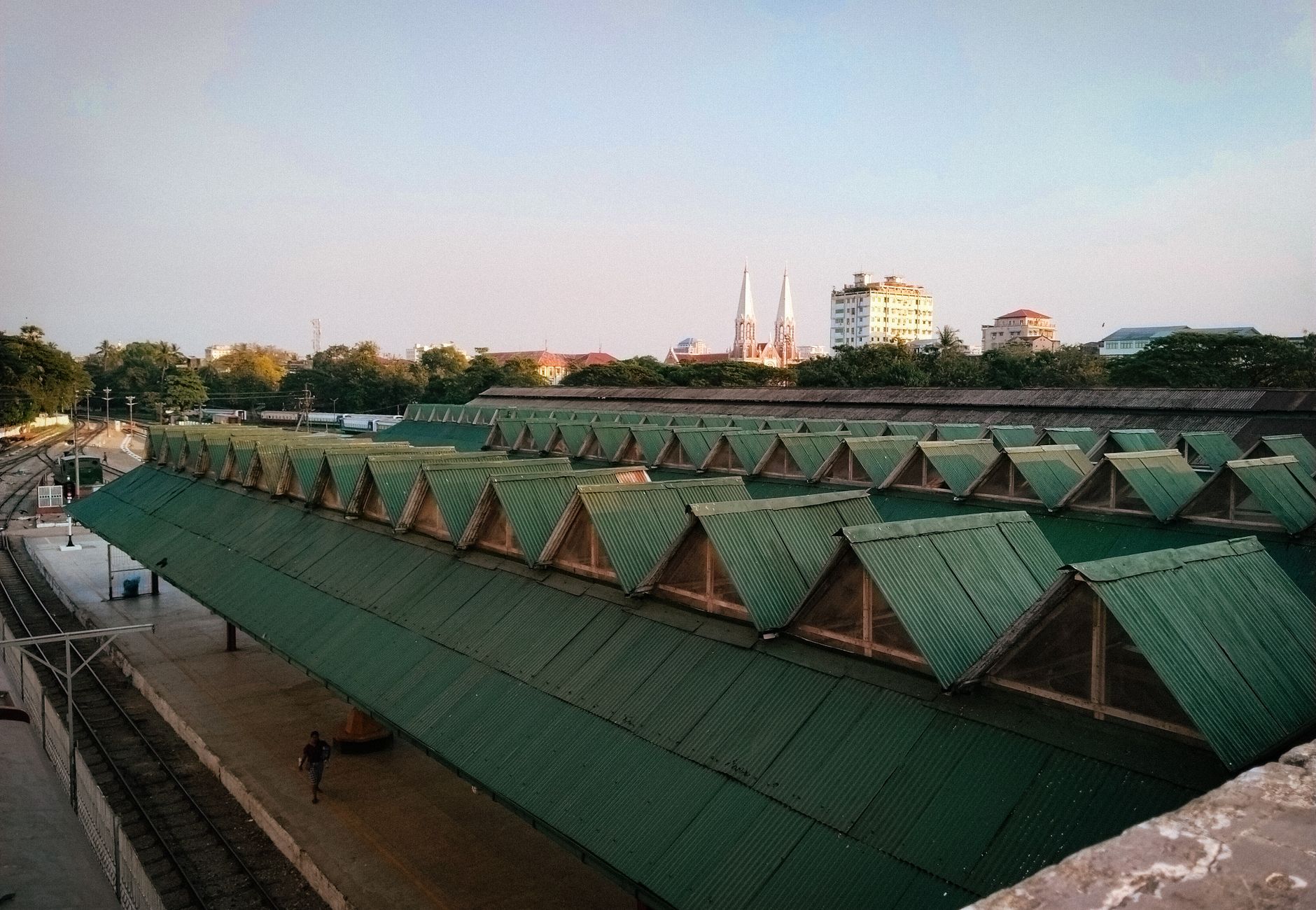 Photo by
 What the Circular Railway Actually Is
Built by British colonial administrators in 1954, the Circular Railway is a 45.9-kilometre loop that rings greater Yangon, connecting the city centre with suburban townships like Insein, Mingaladon, and Danyingon. Forty-three stations complete the full loop. Trains depart Yangon Central Station roughly every hour, and a full circuit takes between two and a half to three hours depending on delays, which are common and entirely forgiven by the time you settle in.
The fare for the full loop sits at around 200 kyat for locals and 2,000 kyat for foreigners (roughly USD 0.50 to $1.00, though currency rates fluctuate). There is a dedicated upper-class carriage with better seats and marginally better ventilation. Most travellers skip it. The ordinary carriages are where the journey actually lives.
The Ride Itself
Board at Yangon Central, a colonial-era station near the city's commercial district, and find a window seat on the right side of the train heading counterclockwise. Within minutes, the city's downtown grid dissolves into something looser: corrugated iron rooftops, palm trees leaning over crumbling walls, children running alongside the tracks as the train lumbers through neighbourhoods that rarely see a tourist.
The first hour heading north is the quietest. Vendors board at each stop carrying trays of fried snacks, fresh coconut, and small bags of pickled tea leaf salad. Buy something. The vendors are not performing for tourists; this is their daily income, and the transaction is a brief, genuine human exchange that most forms of travel have edited out.
Around the northern arc, the train passes Insein, home to one of Myanmar's largest prisons and a sprawling 19th-century railway workshop complex still operational today. Slow down your gaze here. The workshop buildings are enormous brick structures, their facades weathered to a deep ochre, and through open doors you can sometimes see workers bent over engine parts with hand tools. It looks like a scene from 1970. It might be.
The eastern stretch brings rice paddies right to the edge of the tracks. Egrets stand motionless in flooded fields. Wooden bridges span small creeks. The train slows to a crawl at minor stops where a single kerosene lantern marks the platform after dark.
Practical Considerations
Tickets are purchased at Yangon Central Station's main hall. The booking window for foreigners is clearly marked, and staff speak basic English. Trains run from early morning until around 10pm.
A few things worth knowing before you go:
- Direction matters. Counterclockwise (northwest first) passes the most interesting market townships in the morning when activity peaks. Clockwise works fine in the afternoon.
- Time of day shapes everything. Early morning departures catch the commuter crowd at its most vivid. Midday is quieter and hotter.
- Bring small bills for vendors, a bottle of water, and patience. Air conditioning does not exist on these trains.
- Photography requires judgment. People are generally warm about cameras, but ask with eye contact and a smile before photographing anyone directly.
You do not need to ride the entire loop if time is short. Disembark at Insein or Danyingon, explore a local market for an hour, and catch the next train back. The journey is modular in that sense.
Why This Journey Still Matters
Yangon has changed considerably since the political upheavals of recent years, and travel conditions in Myanmar require careful research before any visit. Check your government's current travel advisories. The situation on the ground shifts, and responsible travel here means staying informed.
With that caveat clearly stated: the Circular Railway offers something rare. Riding it, you are not a spectator of a curated experience. You are briefly a passenger on a working train used by working people, and the city slides past without commentary or narration. That unmediated quality is harder to find every year.
Slow travel is often marketed as a philosophy. On the Circular Railway, it is simply the speed of the train.
Get Rail Retreat in your inbox
New posts delivered directly. No spam.
No spam. Unsubscribe anytime.