Ireland's Sligo and Westport Lines: Riding the Wild Atlantic Way by Rail Through Ireland's Forgotten West
 L. Carver
Most visitors to Ireland rent a car. That is understandable, given the country's reputation for narrow country roads, roadside pubs, and the freedom to stop whenever a view demands it. But Ireland's western rail lines make a compelling case for leaving the car behind, especially if you're heading toward Sligo or Westport. These two routes, branching west from Dublin's Heuston and Connolly stations, pass through terrain that feels genuinely remote: wide boglands, silver lakes, low limestone mountains, and, eventually, the kind of Atlantic coastline that convinces people to move to Connaught permanently.
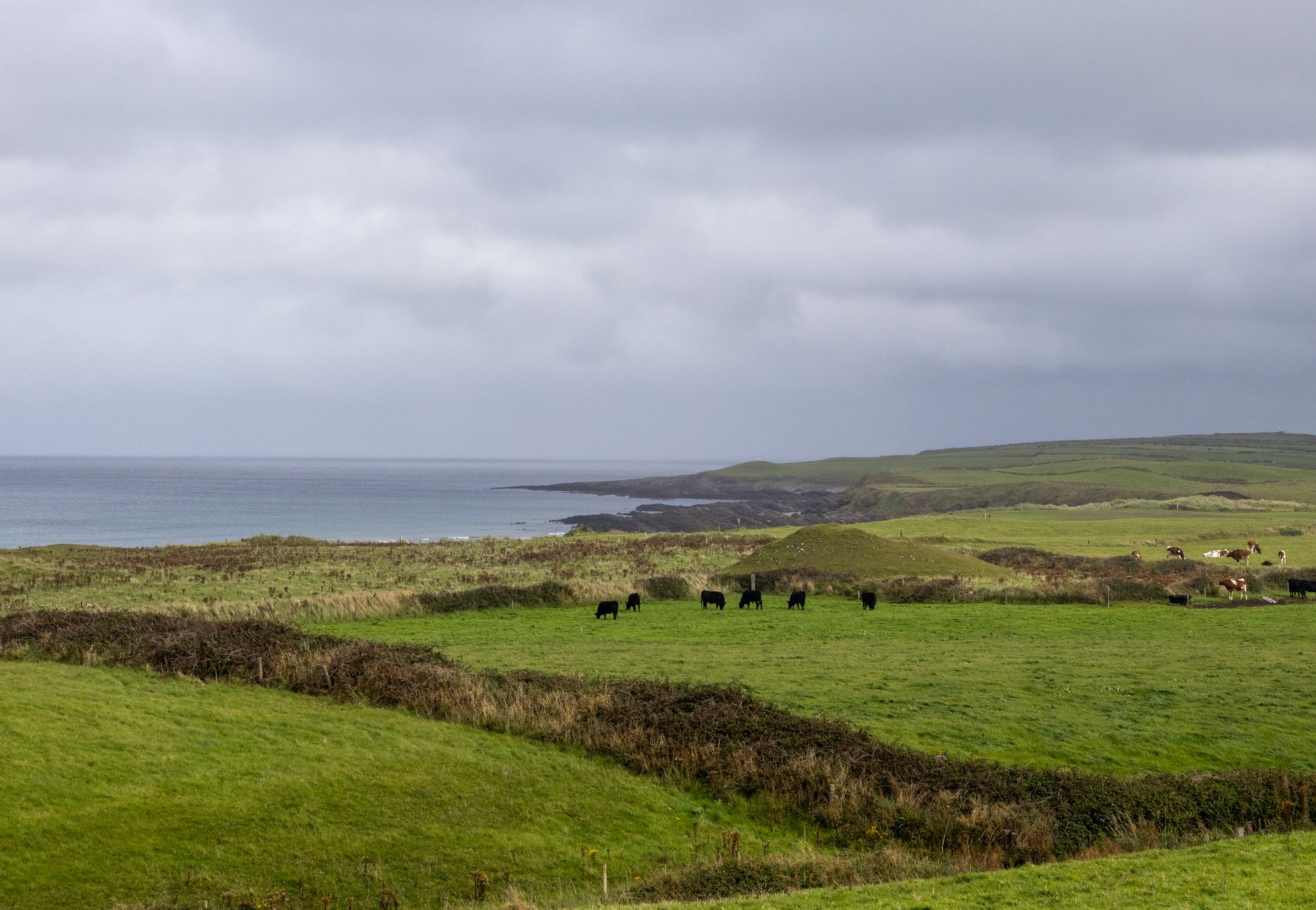 Photo by Phil Evenden on Pexels.
The Dublin to Westport service runs roughly 265 kilometres, taking about three and a half hours on a good day. You leave the city's suburbs behind quickly. By the time the train clears Athlone, the geography shifts: the neat midland fields give way to wider skies and boggier ground. Castlebar comes next, a pleasant market town, and then the line curves toward Westport itself, a planned Georgian town with a quay facing Clew Bay. On a clear afternoon, Croagh Patrick rises sharply to the south, its quartzite summit catching the light. It's the kind of arrival that earns a train journey its reputation.
Sligo is the other story, and arguably the more poetic one. W.B. Yeats spent enough time in this county that it became practically biographical, and the landscape around Lough Gill and Benbulben has that quality of places that have been written about so well they feel half-invented. The Dublin–Sligo line leaves from Connolly Station and takes around two hours and forty minutes, passing through Mullingar and Carrick-on-Shannon before the hills start closing in. Benbulben itself appears on the right-hand side as you approach Sligo town: a flat-topped, almost theatrical mountain that looks like it was borrowed from somewhere more dramatic and left here by accident.
Both routes run on Irish Rail's InterCity stock, which is comfortable without being luxurious. Seats are spacious, there's usually a café car serving decent coffee and sandwiches, and the windows are large enough to matter. Book early on summer weekends; the trains fill with surfers heading to Strandhill, walkers bound for the Ox Mountains, and pilgrims making the annual climb up Croagh Patrick in July.
Practical details worth knowing before you go:
- Dublin to Westport: Four direct services daily from Heuston Station. Journey time approximately 3 hours 30 minutes. The right-hand side of the train (facing west) offers the better views after Athlone.
- Dublin to Sligo: Regular services from Connolly Station, around six per day. Journey time approximately 2 hours 40 minutes. Sit on the left side heading westward for the best views of Benbulben on approach to Sligo.
- Fares: Both routes are covered by the Irish Rail Explorer Pass, which offers unlimited travel for a set number of days within a month. Advance single tickets can be as low as €15-20 if you book two or three weeks out.
- Combining routes: With careful planning, you can take the train to Westport, spend two nights, continue by Bus Éireann up the coast through Achill Sound and Ballina, then catch the train back from Sligo. The loop takes in a substantial arc of the Wild Atlantic Way without touching a rental car.
Westport itself deserves more than a single night. The town is walkable, the pubs along Bridge Street are reliably good, and Croagh Patrick looms over everything in a way that inspires either reverence or guilt about skipping the climb. Clew Bay, with its 365 drumlin islands (one for every day of the year, locals will tell you, with a straight face), is best seen from the water. Kayak hire is available near the quay.
Sligo rewards slower exploration too. The Yeats Building in town has a permanent exhibition worth your time. Rosses Point, a few kilometres out, has one of Ireland's finest links golf courses and a beach that turns savage in winter and sublime in late summer. The Glasshouse Hotel sits right on the river and has a rooftop terrace with views that would embarrass somewhere twice the price.
What makes these lines worth seeking out, beyond the scenery, is the sense that you're arriving as a traveller rather than a tourist. Western Ireland's rail towns weren't designed around tourism the way some coastal spots were. They have hardware shops and local banks and greasy spoon cafés alongside the craft shops. The train delivers you into the middle of that, on foot, without a car to retreat into. That changes how you see a place. It slows you down in exactly the right way.
Get Rail Retreat in your inbox
New posts delivered directly. No spam.
No spam. Unsubscribe anytime.