India's Konkan Railway: Riding the Most Engineered Stretch of Track on the Subcontinent
 L. Carver
Few train journeys in Asia reward patience the way the Konkan Railway does. Stretching 741 kilometres down India's western coast from Mumbai to Mangaluru, this line slices through terrain so hostile that engineers spent decades arguing it was simply impossible to build. Rivers, gorges, rainforest, and the steep escarpments of the Western Ghats stood in the way. When the railway finally opened in 1998, it had required 2,000 bridges and 92 tunnels to do it. Riding it now, you feel every kilometer of that effort.
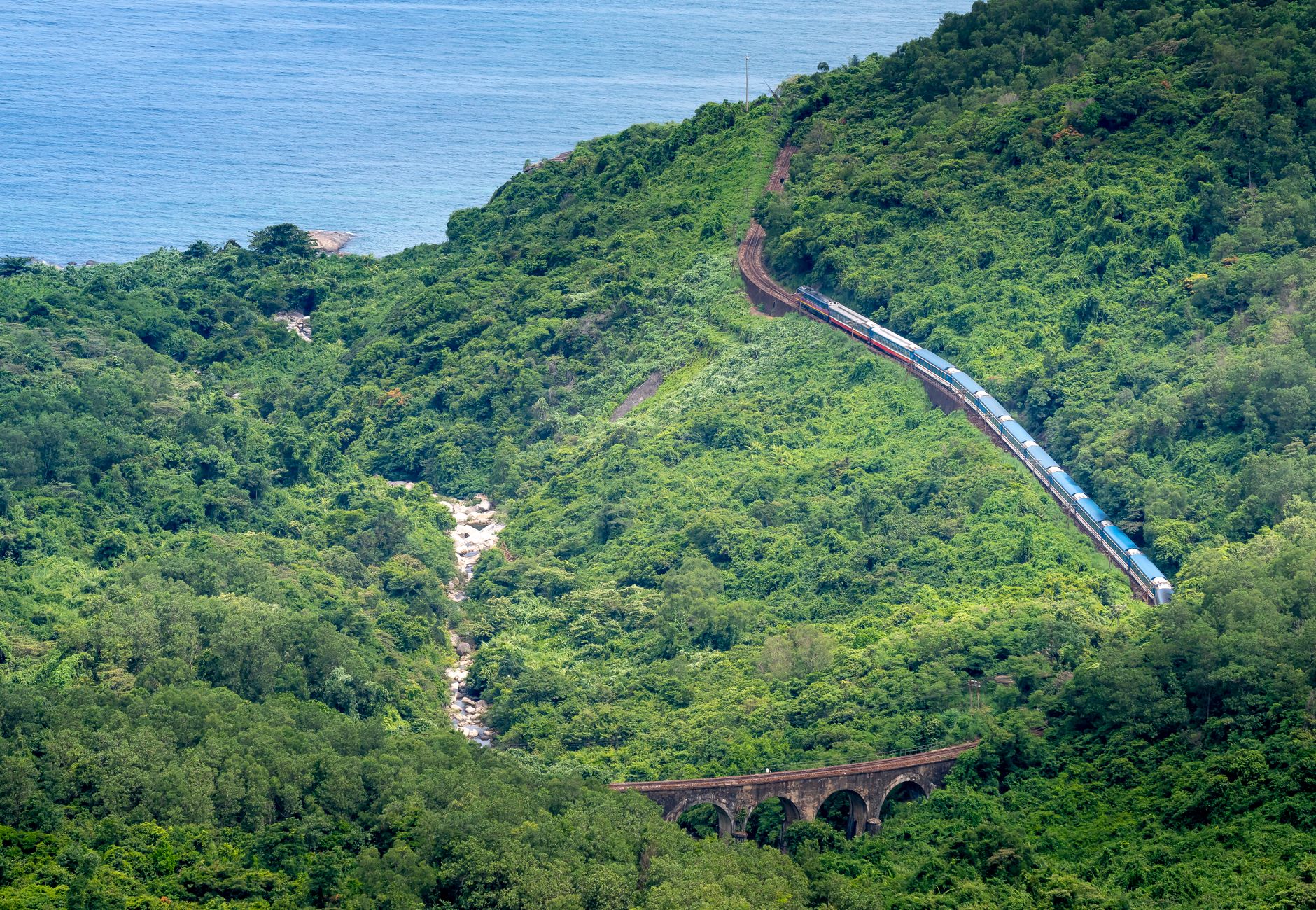 Photo by Quang Nguyen Vinh on Pexels.
The numbers alone don't quite capture what you see from the window. Broad rivers reflecting monsoon clouds, rubber plantations giving way to paddy fields, fishing villages perched on tidal estuaries, and sudden plunges into mountain tunnels where daylight disappears for two full minutes. Somewhere near Ratnagiri, the train crosses the Panval Nadi viaduct, 64 metres above the valley floor, and the view is the kind that makes entire carriages go quiet.
Planning the Journey
Most travellers board at Chhatrapati Shivaji Maharaj Terminus (CSMT) in Mumbai or at Thane. The southern terminus is Mangaluru Junction (also written Mangalore Junction), from where connections fan out toward Goa, Mysuru, and Kerala. Several trains cover the full route; the Mandovi Express and the Jan Shatabdi are popular choices, though the overnight Konkan Kanya Express is worth considering if you want to arrive rested and skip the peak heat.
A few practical points before you book:
- Best season: October through February. The monsoon (June to September) is dramatic but delays are common and landslides occasionally close sections of track.
- Booking: Use the IRCTC website or app. Sleeper class is perfectly comfortable for overnight travel; AC 3-tier offers air conditioning if you need it.
- Journey time: The full run takes roughly 10 to 13 hours depending on the service.
- Break the journey: Ratnagiri, Goa (Madgaon station), and Udupi are natural stopping points.
What You'll Actually See
Leaving Mumbai, the train threads through the dense northern suburbs before the city dissolves into palm groves and red-laterite soil. By the time you clear Roha, two hours south, the scenery has transformed entirely.
Konkan country is green in a way that surprises people used to India's drier interiors. Cashew trees cover the hillsides. Jackfruit hangs from branches close enough to the track that you instinctively duck. Between Khed and Chiplun, the Vashishthi River appears repeatedly, curling through the valley below as the train navigates the contours of the Ghats.
Goa arrives mid-journey, and the Zuari River crossing near Cortalim is one of the route's set pieces: a long bridge over glittering tidal water with mangroves on both banks. Many travellers stop here for a day or two before continuing south through Karnataka.
South of Goa, the landscape thickens. The Western Ghats press closer to the coast and the tunnels come faster. Karwar, just across the state border, sits on a bay that would be internationally famous if it weren't so deliberately overlooked. From there to Mangaluru, the line hugs the edge of the hills through Kumta, Honnavar, and Udupi, each town a little different in language, food, and character.
The Engineering, Up Close
What the Konkan Railway achieved under chief project engineer E. Sreedharan (later famous for Delhi Metro) deserves more credit than it usually receives in travel writing. Constructing through the Ghats meant constant battles with soft basalt, underground springs, and monsoon erosion. Several tunnels required hand-drilling through rock faces that resisted conventional boring equipment.
The Karbude tunnel, at 6.5 kilometres, is the longest on the route. Sitting in the carriage as the train enters and the windows go dark, you get a strange sense of the mountain sitting above you. It lasts about four minutes at normal speed. When daylight returns, there's usually a gasp somewhere in the compartment.
Eating Along the Way
Station food on this route is genuinely good. Vendors at Ratnagiri platform sell Alphonso mango juice and fish curry rice wrapped in banana leaf. Udupi station, predictably, is excellent for dosas. On the train itself, pantry car meals are serviceable; bring your own snacks if you're particular, but don't skip the chai that materialises at every halt.
The Konkan Railway won't be the fastest journey you take in India. That's the entire point. Slow down, watch the rivers, let the tunnels swallow you and spit you out into sunlight. It's one of the subcontinent's genuine pleasures, built through rock and forest at enormous human cost, and it earns every hour you give it.
Get Rail Retreat in your inbox
New posts delivered directly. No spam.
No spam. Unsubscribe anytime.