Greece's Hellenic Railways: Riding the Scenic Thessaloniki to Alexandroupoli Line Along the Aegean Coast
 L. Carver
Greece rarely appears on lists of great rail destinations. That oversight is understandable: the ferry is king here, roads are fast, and domestic aviation is cheap. But there is a train journey in northern Greece that deserves far more attention than it gets. The line from Thessaloniki east to Alexandroupoli runs for roughly 350 kilometres along a coast that most tourists never see, through landscapes that shift from industrial hinterland to protected wetland to tobacco-growing river delta to the final push toward the Turkish border.
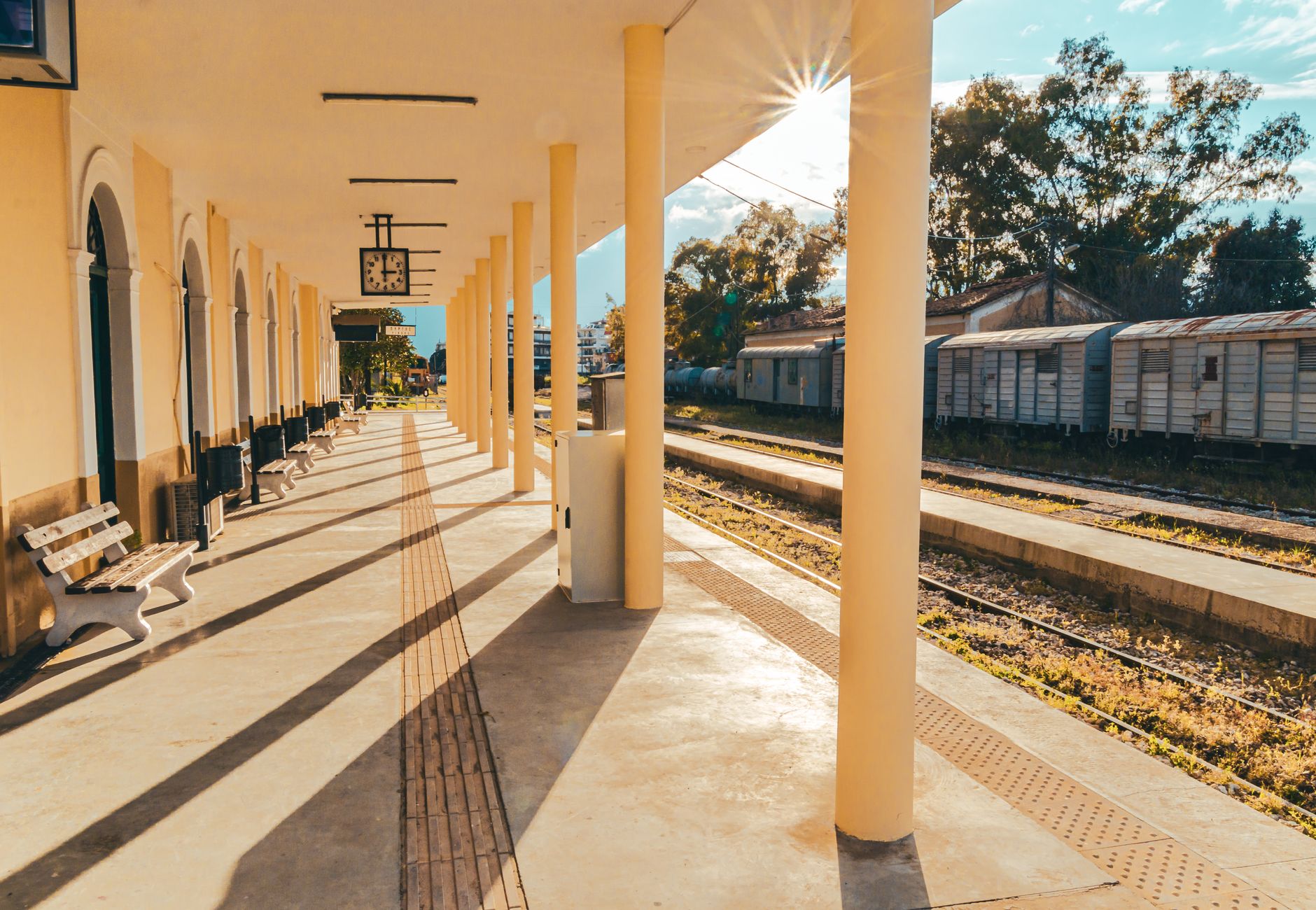 Photo by Kostas Dimopoulos on Pexels.
Riding it takes about five to six hours on the InterCity service operated by Hellenic Train (formerly TrainOSE). That is plenty of time to settle in, watch the Aegean appear and disappear through the window, and understand why slow rail travel rewards patience.
The Route in Brief
graph LR
    A[Thessaloniki] --> B(Kavala Region)
    B --> C{Xanthi}
    C --> D[Komotini]
    D --> E(Nestos Delta)
    E --> F[Alexandroupoli]
Thessaloniki itself is worth at least two days before you board. Greece's second city is louder, grittier, and more interesting than most travel writing admits. The railway station sits at the western edge of the waterfront, and the train departs east through the city's industrial fringe before the landscape opens into the plains of Macedonia.
The early stretch is flat and agricultural. Tobacco fields, sunflower plots, small farming villages with Byzantine churches. Nothing dramatic, but genuinely absorbing if you stop expecting postcards and start watching.
Kavala: The Overlooked Jewel
Around the 160-kilometre mark, the train curves inland near Kavala. The city itself sits on a promontory jutting into the sea, with a Roman aqueduct bisecting its old quarter and a Mehmet Ali birthplace tucked into the Ottoman upper town. Most passengers don't stop here. They should.
The nearby coast is punctuated with beaches that see a fraction of the crowds that pack Santorini and Mykonos. Kavala also serves as the jumping-off point for Thassos, a forested island accessible by ferry in under an hour.
Xanthi and the Thrace Interior
Past Kavala, the train enters Thrace, the region that Greece shares culturally and historically with Bulgaria and Turkey. Xanthi is the area's most visually striking stop: a town of wooden-balconied Ottoman houses climbing a hill above a tobacco merchants' old quarter. The Thursday market draws the region's Muslim minority communities alongside Greek Orthodox locals, and the resulting mix of languages, food stalls, and textiles feels unlike anywhere else in the country.
From Xanthi east, the line crosses the Nestos River. This is where the journey earns its keep photographically. The Nestos Delta is a protected wetland of national importance, home to otters, black storks, and kingfishers. The train moves slowly here, the track threading between the river's braided channels and the edge of the coastal lagoons. On a clear morning, the light off the water is extraordinary.
Komotini and the Final Push
Komotini is the regional capital of Rhodope, and a useful overnight stop if you want to break the journey. Its covered bazaar (the Bazaar of Komotini, one of the few remaining in Greece) dates to the Ottoman period and still operates as a working market rather than a tourist attraction.
The final section from Komotini to Alexandroupoli crosses the flat Thracian plain with the Rhodope Mountains visible to the north. These mountains form the border with Bulgaria and carry a permanent cap of cloud even in August. The contrast between the hot, bleached plain and the dark forested ridges above gives the last hour of the journey a quietly unsettling beauty.
Alexandroupoli is the line's terminus: a port city with a lighthouse that serves as its unofficial symbol, good seafood along the waterfront, and a palpable sense of being at the edge of things. The Turkish border is 40 kilometres east. The train goes no further.
Practical Notes
Hellenic Train runs two to three services daily on this route. The InterCity is the faster option; regional trains stop more frequently but allow you to hop off at smaller stations. Book tickets at least a day ahead in summer through the Hellenic Train website, though walk-up tickets are usually available outside peak weekends.
Compartments are clean but not luxurious. Bring food: the onboard cafe car has limited options. A window seat on the south side of the train gives you the best sea views between Kavala and Alexandroupoli.
September is the ideal month. The summer crowds have thinned, the heat is manageable, and the wetlands around the Nestos are at their most active for birdwatching. The light in the late afternoon, with the Aegean catching the sun at a low angle, makes even the flat stretches of Thrace look genuinely beautiful.
This is not a journey that announces its greatness. It builds it, quietly, over six hours of watching a country most visitors completely miss.
Get Rail Retreat in your inbox
New posts delivered directly. No spam.
No spam. Unsubscribe anytime.