Ethiopia's Ethio-Djibouti Railway: Riding Africa's First Modern Electric Train Through the Horn
 L. Carver
Few train journeys on earth feel quite so improbable. A fully electrified railway, running nearly 760 kilometres from the landlocked highlands of Ethiopia down to the Red Sea port of Djibouti City, cutting through volcanic desert, acacia scrubland, and the shimmering heat of the Afar Triangle. Opened in 2017, the Ethio-Djibouti Railway replaced a crumbling French colonial metre-gauge line that had soldiered on since 1917. The new line runs standard gauge, powered by electricity drawn from Ethiopian hydropower, and built largely through Chinese engineering and financing. It is, by any measure, a serious railway.
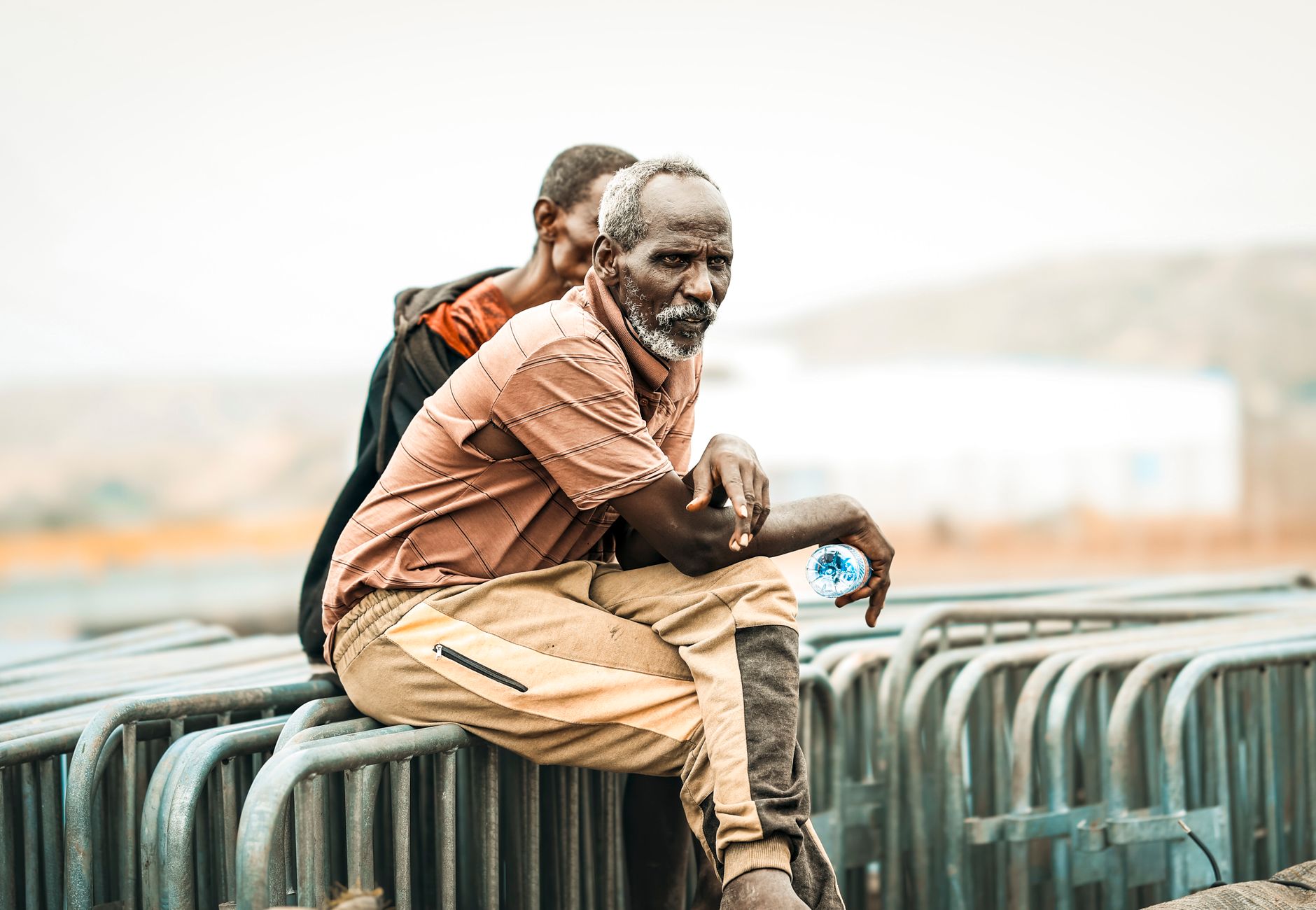 Photo by Mohamed Badri on Pexels.
And almost nobody outside the region knows it exists.
What the Journey Actually Looks Like
The route begins at Lebu station on the outskirts of Addis Ababa, a city sitting at roughly 2,355 metres above sea level. From there, the train descends. Dramatically. Within a few hours, passengers watch the cool green highlands give way to increasingly spare terrain, the air warming visibly as altitude drops. By the time the train reaches the Awash River valley, the elevation has fallen by more than 1,500 metres and the scenery has shifted into something closer to lunar.
The Afar region is not comfortable travel. Temperatures outside can exceed 50°C in summer. But through an air-conditioned carriage window, the landscape is extraordinary: salt flats, volcanic cones, camel herds moving along dry riverbeds. Dallol, the hottest inhabited place on earth, lies to the north. You feel its general neighbourhood even from the train.
Crossing into Djibouti, the terrain stays volcanic and austere all the way to the coast. Djibouti City itself is compact and strange, a port capital shaped by French colonial architecture, Ethiopian trade, and proximity to one of the world's busiest shipping lanes.
Total journey time runs around 12 hours on passenger services, though freight dominates the line and schedules have been inconsistent. Check current timetables through the Ethio-Djibouti Railways (EDR) joint authority before booking. Patience is part of the ticket price.
Practical Details Worth Knowing
Both Ethiopia and Djibouti require visas for most nationalities. Djibouti offers e-visas online; Ethiopia's e-visa system works smoothly for most passport holders. Cross-border formalities happen at the Dewele/Galafi border point, where the train pauses for customs and immigration checks. Give yourself extra time in your planning. Border crossings on African railways rarely run to a strict clock.
Passenger services typically operate out of Lebu and terminate at Nagad station in Djibouti City. Ticket classes vary, and the rolling stock includes Chinese-built CRRC passenger cars that are comfortable without being lavish. Bring food and water. Station facilities along the route range from minimal to nonexistent.
The best months to travel are November through February, when temperatures across the Afar are merely intense rather than genuinely dangerous. Early morning departures also help; the desert light in the Awash valley at dawn is something photographers wait years to see.
Why This Railway Matters
Ethiopia has no coast. Roughly 80% of its imports and exports move through the Port of Djibouti. That single fact explains everything about why this railway was built and why both governments treat it as a strategic priority. Before the line opened, goods crawled along a single highway through the same brutal terrain. The railway changed the economics of landlocked commerce in the Horn of Africa.
For travellers, the significance is different. This route offers access to one of the least-visited corners of the continent, one with genuinely spectacular geology and cultures that see almost no tourism. The Afar people have lived in this depression for millennia. The railway passes through their territory without requiring a four-wheel-drive expedition to reach it.
Some travellers pair the train with a visit to the Danakil Depression, arranging a guide from Mekele or Semera for the side trip to Dallol's acid pools and the Erta Ale lava lake. That adds complexity and cost, but it turns a rail journey into something truly singular.
The Honest Caveats
Service reliability remains the journey's biggest variable. Freight takes priority, passenger schedules shift, and information in English is sparse. Online forums and recent traveller reports on sites like The Man in Seat 61 are your best source of current conditions.
Come prepared for improvisation. Carry local currency in both Ethiopian birr and Djiboutian francs. Have your accommodation booked in Djibouti City before you arrive; options are limited and the city is small.
None of that should put you off. Rare railways require a little more effort. This one rewards it with a crossing of an ancient, violent, beautiful piece of the planet, and the quiet satisfaction of riding a train that most travellers have never heard of.
Get Rail Retreat in your inbox
New posts delivered directly. No spam.
No spam. Unsubscribe anytime.